
As Cross-Border Consumption Enters the "Era of Behavioral Analysis" : The Risks and Regulatory Thinking of Overseas Credit Card Usage


In the past, many people had a simple understanding of using credit cards overseas: as long as the amount was small, there would be no problem.
However, today's reality is changing. Driven by global trends in Anti-Money Laundering (AML), Combating the Financing of Terrorism (CFT), and cross-border tax transparency, financial regulatory authorities across countries are strengthening their digital monitoring capabilities for cross-border capital flows. China is also continuously improving its reporting and monitoring mechanisms for overseas transactions made with domestic bank cards.
This means that regulators are no longer just focusing on "large-amount funds," but rather on complete "behavioral trajectories."
I. The Upgrade of Regulatory Logic: From Amount Monitoring to Behavioral Analysis
Traditional regulatory models emphasize:
Single large-amount transactions
Sudden abnormal transfers
Concentrated capital flows
The current regulatory trend, however, is much more refined:
Focusing on transaction frequency
Analyzing consumption scenarios
Identifying paths of country/region switching
Evaluating Merchant Category Codes (MCC)
Observing the correlation between transactions
It is particularly noteworthy that:The data reported by banks increasingly focuses on "transaction authorization information," rather than just the final settlement information.
This means that even if a transaction is ultimately canceled, refunded, or reversed, the related behavior may still be recorded in the system.
The regulatory perspective is no longer just "whether the money was successfully deducted," but rather: whether a certain attempt at financial behavior occurred.
II. Which Overseas Credit Card Behaviors Are More Likely to Trigger Scrutiny?
Not all overseas consumption poses a risk. What truly triggers system alerts is usually the "behavioral pattern."
1. High-Frequency, Small-Amount, Multiple Withdrawals
Typical features include:
Multiple ATM withdrawals within a short period
Deliberately splitting amounts
Frequent switching between different countries
Mixing with online payments
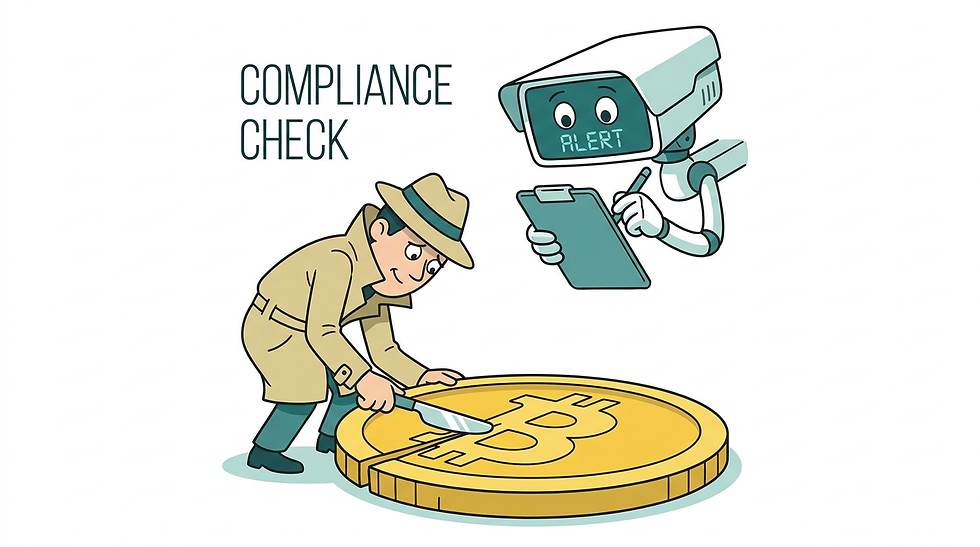
Viewed as single transactions, they may all seem ordinary; but looking at the overall behavior, the system might assess: Is there a possibility of splitting funds, evading monitoring, or covertly transferring funds?
The issue is not the size of the amount, but whether the "pattern is abnormal."
2. Consumption Related to High-Risk Merchant Categories
Regulatory systems conduct risk assessments based on Merchant Category Codes (MCC). Certain sectors may be classified as key areas of concern, such as:
Digital asset-related platforms
Gambling merchants
Certain fintech channels
Specific high-risk jurisdictions
Many cardholders are unaware that some seemingly ordinary platforms might have their acquiring categories classified as high-risk.
As a result, an ordinary online payment might have already triggered a risk control tag in the background.
3. Frequent Pre-authorizations and Canceled Transactions
Common behaviors for business travelers include:
Hotel pre-authorizations
Subsequent cancellations
Transaction reversals
Refund processing
The personal perception might be: "Since there was no actual deduction, it doesn't count as a real transaction." But from a regulatory perspective: the authorization behavior itself has already occurred.
The system may record the complete data chain, including:
Authorization → Cancellation → Reversal → Refund
If these behaviors occur frequently, they may also be incorporated into analytical models.
4. Long-Term Processing of Business Funds with Personal Credit Cards
Higher-risk situations often arise when:
Using personal cards to collect or make payments on behalf of a company
Acting as a financial bridge for third parties
Frequent cross-border business dealings
Fund scale significantly mismatching personal income
When the fund path is inconsistent with identity characteristics, the system is more likely to form a risk profile.

III. What Do Regulators Truly Care About?
The core of modern cross-border regulation is not to "restrict consumption."
What they truly care about is:
Whether the source of funds is reasonable
Whether the purpose of funds is genuine
Whether the transaction logic is self-consistent
Whether the behavioral pattern is abnormal
The regulatory system acts more like a "behavioral model analysis system," comprehensively judging:
Time distribution
Geographical path
Merchant structure
Transaction frequency
Fund correlation
Ultimately answering one question:Does this fund path conform to the behavioral logic of a normal economic entity?
IV. Practical Impacts on Cross-Border Individuals
For those engaged in normal tourism, studying abroad, or business travel:There is usually no need for excessive anxiety.
The reasons are:
Natural consumption scenarios
Coherent behavioral paths
Clear sources of funds
Explicable transaction backgrounds
The situations that are truly prone to risk are:
Deliberately evading monitoring
Long-term mixing of personal and business funds
High-frequency splitting of transactions
High overlap with high-risk channels
The core issue of cross-border finance in the future may no longer be:"Can the money go out?"But rather:"Is your fund path explicable?"

V. Compliance Thinking in an Era of High Transparency
As global financial regulation becomes increasingly data-driven and systematic, the transparency of cross-border funds has become a trend.
In this environment, more robust practices include:
1. Separation of Personal and Business Accounts
Avoid long-term use of personal credit cards to handle business receipts and payments.
2. Avoid Deliberately Splitting Transactions
Frequent small-amount operations are often more likely to trigger scrutiny than a single reasonable consumption.
3. Pay Attention to Merchant Attributes
Especially regarding platforms involving digital assets or high-risk areas.
4. Retain Business Background Materials
Including contracts, invoices, travel arrangements, statements of purpose, etc. In the future, the "ability to prove transaction authenticity" will become increasingly important.
Conclusion
Using a credit card overseas is not inherently a risky behavior. However, cross-border financial regulation is transitioning from the "era of amount regulation" to the "era of behavioral regulation."
In this environment: risk no longer depends solely on the size of the amount, but on whether the behavioral logic is reasonable and the fund path is clear.
When all transactions are recorded in data systems, true security is not about evading regulation, but ensuring that every sum of money can stand up to explanation.
[Limited-Time Expert Consultation Invitation]
FOFA sincerely invites visionary entrepreneurs and investors to engage in deep, practical exchanges regarding the aforementioned trends—specifically the implementation of "AI Agent Labor Systems (Agentic AI)."
We will provide you with a complimentary expert planning consultation to help you tailor a specific entrepreneurial path or investment blueprint, allowing technology leverage to serve your asset appreciation.
Book your strategic dialogue NOW:


Comments